Mold Manufacturing
From Design to Production: Bringing the Mold to Life
What Is Mold Manufacturing?
Mold manufacturing is the process by which the mold to be used in plastic injection production is machined from design data, assembled, trial-run and prepared for serial production.
This process is not merely mechanical machining; it is run with a focus on dimensional precision, assembly fit, cooling balance and long-term production performance.
At Senkron Group Plastik, mold manufacturing is planned and executed with production reality in mind.
Request Technical Quote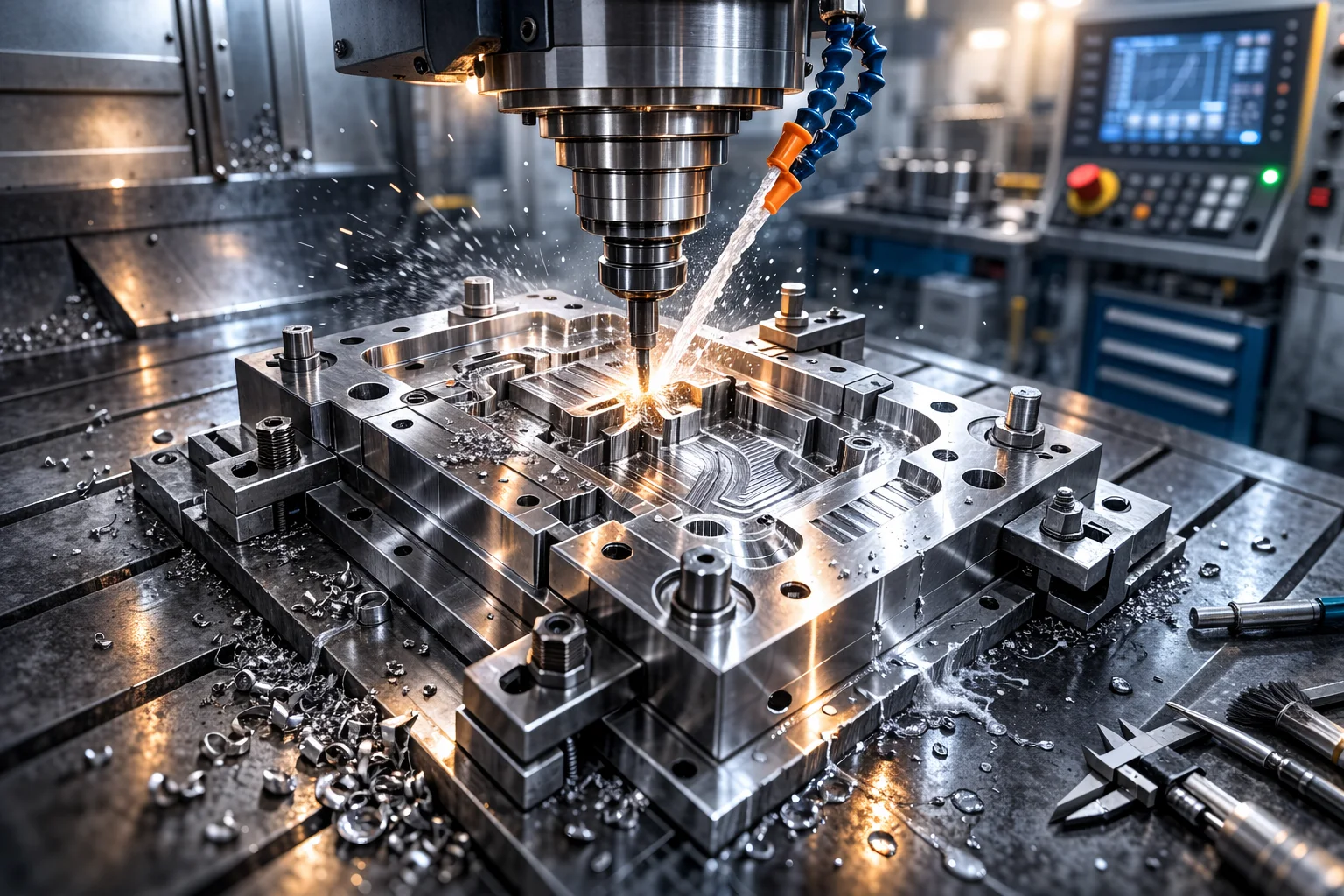
How Does the Process Work?
1Material and Steel Selection
The mold manufacturing process begins with the right steel selection.
The appropriate mold steel is determined according to production volume, part geometry, surface expectations and operating conditions (e.g. pre-hardened or heat-treatable steels).
This stage directly affects:
- Mold life
- Wear resistance
- Thermal stability
are directly affected at this stage.
2CNC and Precision Machining
CNC machining is the processing of mold plates and core components on computer-controlled equipment to micron-level tolerances.
At this stage:
- Dimensional tolerances are controlled
- Precision machining is applied in critical areas
- Manual surface corrections are made when necessary
The aim is to proceed to assembly with minimum deviation.
3Assembly and Fit Check
All machined components are brought together at the assembly stage.
Key elements checked at this stage:
- Moving mechanisms
- Ejectors
- Guide systems
- Cooling channels
- Sealing areas
Assembly fit is one of the most critical stages that determine the mold's production stability.
4What Is a Trial Run?
The trial run is the performance validation process of the mold before serial production.
The mold is connected to the injection machine and first production is carried out.
Checked at this stage:
- Part dimensions
- Surface quality
- Fill balance
- Flash formation
- Cooling time
Necessary technical adjustments and revisions are made at this stage. The mold is not released for serial production until the trial is complete.
5Approval and Transition to Serial Production
After the trial process is technically validated, the mold is prepared for serial production.
The goal is not only a working mold but sustainable production performance.
Mold Life and Performance
In mold manufacturing, the goal is not only first-production success.
Long-term performance depends on:
- Steel quality
- Heat treatment processes
- Machining precision
- Assembly fit
- Periodic maintenance
A well-planned mold can deliver stable production over thousands or even millions of cycles.
Advantage of Integrated Operations
When mold design, mold manufacturing and plastic injection production are carried out within the same structure, design decisions are applied in line with production reality.
This integration:
- Reduces revision risk
- Shortens commissioning time
- Speeds up production handover
- Provides fast technical feedback during trial
This approach ensures the mold is efficient not only technically but also operationally.
Frequently Asked Questions
How long does mold manufacturing take?
Lead time varies according to part complexity, number of cavities, mechanical systems and machining details.
Is the mold delivered without a trial run?
No. The mold is not released for serial production without trial production.
How is mold life extended?
Correct steel selection, appropriate heat treatment, precision machining and periodic maintenance extend mold life.
Is mold revision possible?
Yes. Technical revisions deemed necessary during the trial phase or in production can be applied.
Why is the type of steel used in mold manufacturing important?
Mold steel selection directly affects the mold's durability, wear resistance and long-term performance. The appropriate steel type is determined considering production volume, the plastic material used and operating temperature. Wrong steel selection can lead to premature wear, dimensional loss and increased maintenance frequency. The right material choice increases mold life and production stability.